
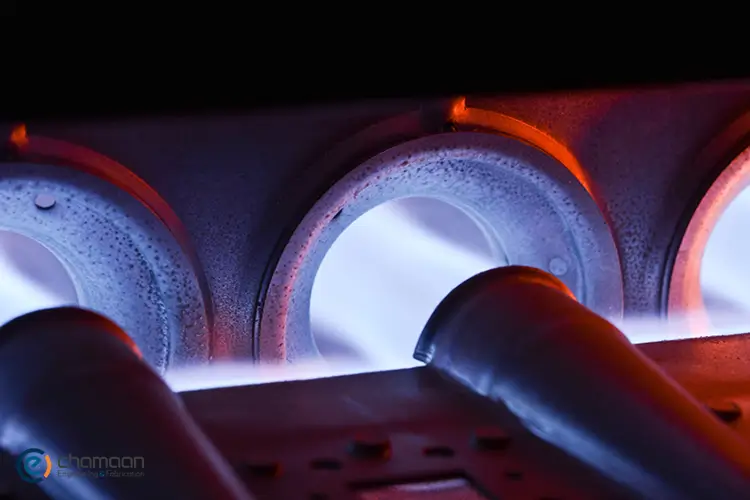
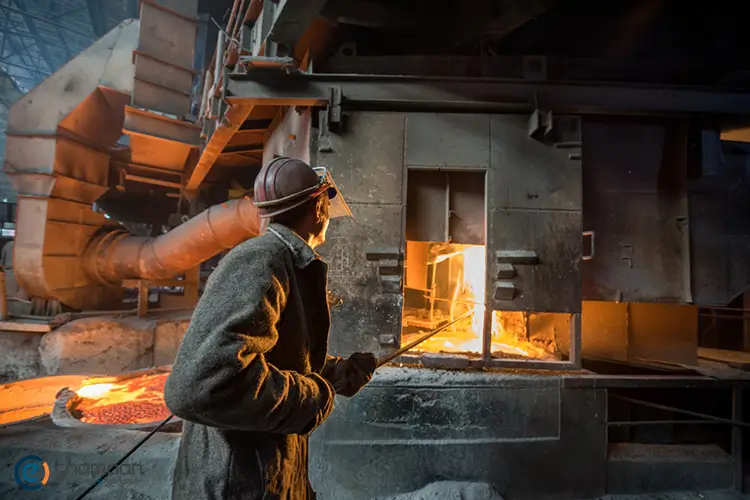
Industrial furnaces vary by heat source, heat-transfer method, operating mode, temperature range, atmosphere, and process. Common types of furnaces include fired, electric, direct-fired, indirect-fired, batch, continuous, heat-treatment, melting, calcination, incinerator, and reformer furnaces. The right choice depends on factors such as temperature, process requirements, capacity, energy source, material handling, atmosphere, and emissions.
If you’re looking for a reliable supplier of Different types of industrial furnaces, explore Chaman’s range of products designed for the oil and petrochemical industries. Our Industrial Furnaces for Sale page provides an overview of the furnace solutions we offer, along with other industrial equipment available from Chaman.
What Is Furnace and how it work?
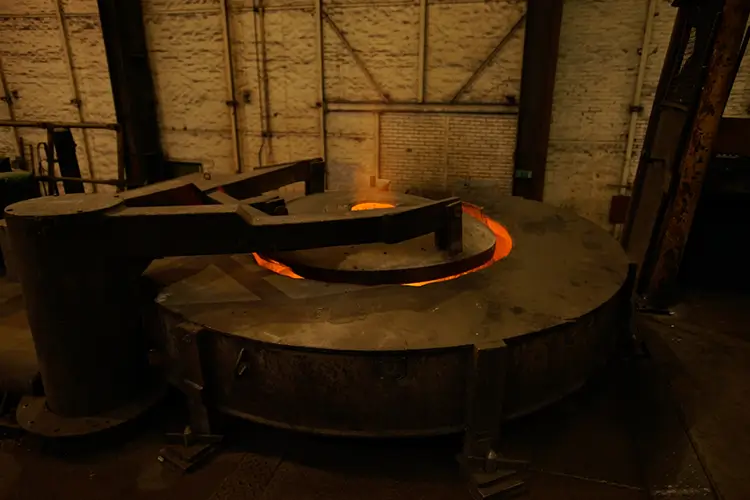
An industrial furnace is a thermal processing system used to heat materials or process streams for applications such as chemical reactions, heat treatment, melting, calcination, reforming, and thermal destruction. Heat may come from fuel combustion, electrical resistance, induction, or an electric arc and is transferred through radiation, convection, conduction, or a combination of these methods.
Industrial furnaces typically include burners or heating elements, refractory lining, insulation, temperature controls, process chambers, and exhaust systems. In process industries, a furnace is often part of a larger thermal system, such as a fired furnace that heats a process fluid before another unit.
How Are Furnaces Classified?
industrial furnaces can be classified from several engineering perspectives, including heat source, heating method, operating mode, and application. A single furnace may belong to several categories at the same time—for example, a gas-fired, direct-fired, continuous process furnace.
Main 5 Types of Furnaces
The main furnace types differ primarily in their heat source and the way heat is transferred to the process. Fired and electric furnaces describe the energy source, while direct-fired and indirect-fired furnaces describe how that energy reaches the material.
Gas Furnace
A gas furnace uses the combustion of natural gas as its primary heat source. These systems are manufactured in different capacities and efficiency levels, making them suitable for a wide range of heating requirements. They are particularly effective in areas where winters are severe and natural gas is readily available.
Although gas furnaces remain a common heating option, their use is increasingly being compared with electric alternatives because of energy prices, emissions considerations, and available incentives. When choosing a gas furnace, buyers should consider not only the purchase and installation cost but also long-term operating expenses, maintenance requirements, and access to a reliable gas supply.
Fired Furnaces
Fired furnaces generate heat by burning a fuel, most commonly natural gas or fuel oil. Burners create the required thermal energy inside a combustion zone, and the resulting heat is transferred to the process through radiation, convection, or direct contact.
Fired systems are widely used in chemical and petrochemical plants because they can deliver substantial thermal duty. Depending on the process, combustion gases may remain separated from the process fluid or may contact the material directly.
A fired furnace therefore requires careful attention to burner design, fuel supply, combustion control, refractory condition, draft, flue gas handling, and emissions.
Electric Furnaces
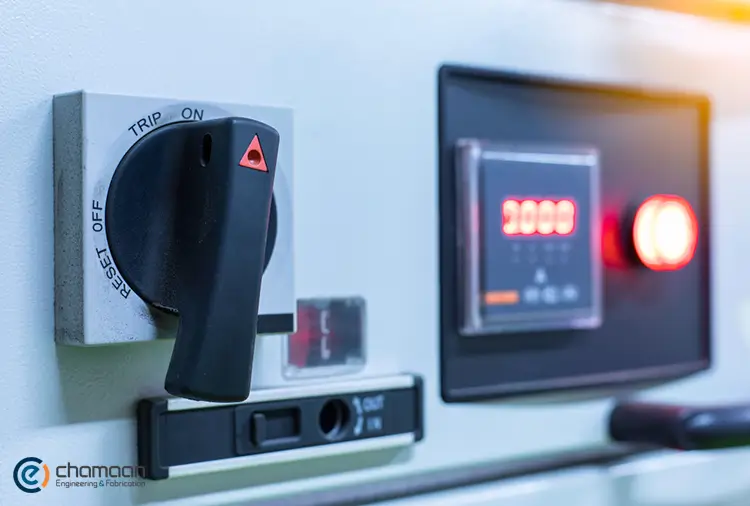
Electric furnaces use electrical energy rather than fuel combustion. Resistance heating, induction heating, and electric arcs are common methods.
Their main advantage is precise control of temperature and heating conditions. They also avoid combustion gases in the heating environment, which can be important for materials that are sensitive to oxidation or contamination.
Electric furnaces are common in heat treatment, laboratory processing, specialty materials, melting, and applications where tight temperature control is more important than the economics of large-scale fuel combustion.
Direct-Fired Furnaces
A direct-fired furnace transfers combustion heat directly to the material or process stream. The flame and hot combustion gases are therefore part of the heating environment.
This arrangement can provide efficient heat transfer, but it is only suitable when contact with combustion products does not compromise the process. Direct firing is often selected when rapid heating is desirable and the process can tolerate the resulting atmosphere.
Indirect-Fired Furnaces
An indirect-fired furnace keeps the combustion gases separate from the material being heated. Heat is transferred through a barrier such as a radiant tube, muffle, or furnace wall.
This design is useful when contamination, oxidation, or direct contact with combustion products must be controlled. The trade-off is that the additional heat-transfer barrier can reduce thermal efficiency compared with direct contact.
Batch vs. Continuous Furnaces
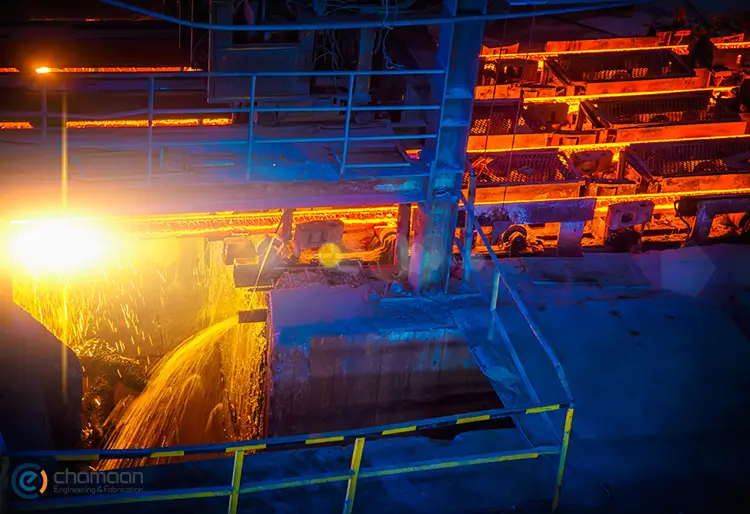
The key difference is material flow: batch furnaces process a defined load at a time, whereas continuous furnaces heat material as it moves through the equipment. The right choice depends mainly on production volume, product variation, residence time, and the required degree of process flexibility.
Batch Furnaces
Batch furnaces heat a fixed quantity of material during a defined cycle. The load is charged, heated according to a temperature profile, held for the required time, and then removed.
They are suitable when production involves different products, smaller production runs, or frequent changes in process conditions. Box, bell, pit, and many vacuum furnaces can operate in batch mode.
The main advantage is flexibility. The disadvantage is that charging, heating, cooling, and unloading cycles can reduce throughput compared with a properly designed continuous system.
Continuous Furnaces
Continuous furnaces maintain an ongoing material flow through the heating system. Conveyors, rollers, walking beams, pusher systems, or other mechanisms transport the material through one or more temperature zones.
They are better suited to high-volume production where the process conditions remain relatively stable. Continuous operation can improve throughput and energy utilization, but the equipment is generally less flexible when product dimensions or thermal requirements change frequently. Common industrial configurations include roller hearth, pusher, conveyor, and walking beam furnaces.
Types of Industrial Furnaces by Application
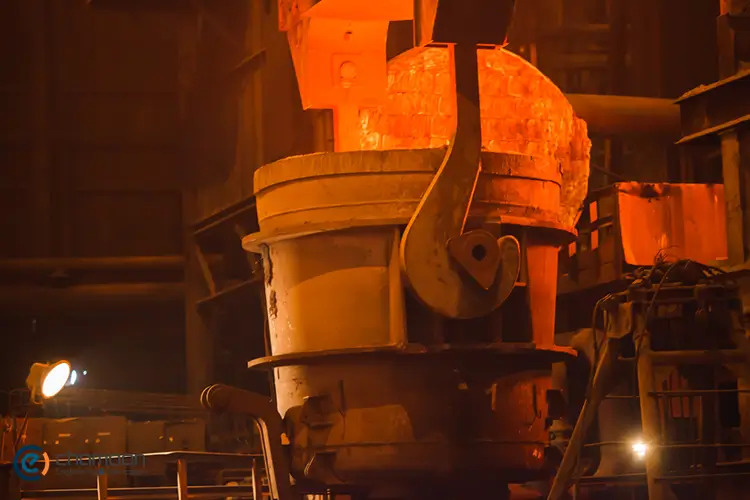
Application is often the most useful way to compare industrial furnaces because it connects the equipment directly to the required process duty.
Process Furnaces
Process furnaces heat liquids, gases, or other process streams to a specified temperature, often as part of a chemical or petrochemical process. Unlike many heat-treatment furnaces, the furnace may be heating a flowing process fluid rather than a solid batch.
A process furnace can include radiant and convection sections. The radiant section provides the main high-temperature heat transfer, while the convection section recovers useful heat from hot flue gases before they leave through the stack.
In chemical plants, furnace selection must account for fluid properties, required outlet temperature, residence time, pressure, heat duty, tube metallurgy, burner arrangement, and allowable tube-wall temperature. These factors make process furnaces fundamentally different from general-purpose industrial heating equipment.
Heat Treatment Furnaces
Heat treatment furnaces are designed to modify the physical and mechanical properties of metals through controlled heating and cooling. Processes include annealing, hardening, tempering, stress relieving, carburizing, and related treatments.
Temperature uniformity is critical because variations across the load can produce inconsistent hardness, distortion, or other unwanted material properties. Heat-treatment furnaces may operate in batch or continuous configurations and can use gas, electricity, vacuum, or controlled atmospheres.
Melting Furnaces
Melting furnaces provide enough thermal energy to transform solid materials into molten metal, glass, or other materials. Induction, electric arc, crucible, and fuel-fired designs are among the configurations used for different melting duties.
The correct design depends on the material, melting temperature, required capacity, melt quality, energy availability, and tolerance for oxidation or contamination. Induction furnaces, for example, generate heat within electrically conductive material through electromagnetic induction and are widely used where controlled melting is required.
Calcination Furnaces
Calcination furnaces heat solid materials to a temperature at which a chemical or physical transformation occurs, commonly involving decomposition, removal of volatile components, or phase changes.
Rotary furnaces are frequently used for calcination because their rotating configuration continuously moves and mixes the material while exposing it to heat. The required temperature, residence time, particle size, gas flow, and material chemistry determine the appropriate furnace configuration.
Incinerator Furnaces
Incinerator furnaces use controlled high-temperature combustion to thermally destroy waste or unwanted combustible materials. Their design must account for waste composition, combustion temperature, residence time, oxygen availability, emissions, and downstream gas treatment.
Unlike a furnace used simply to heat a product, an incinerator is designed around destruction efficiency and emissions control. Depending on the waste stream, additional equipment may be required to treat combustion gases before discharge.
Reformer Furnaces
Reformer furnaces supply the heat required for reactions such as steam reforming. In a steam reforming system, hydrocarbon feed reacts with steam inside catalyst-filled tubes, while burners in the furnace provide the external heat needed to sustain the endothermic reaction.
The furnace therefore has two closely connected sides: the combustion system that generates heat and the process tubes that transfer that heat to the reacting gas. Tube-wall temperature, heat flux, burner arrangement, fuel efficiency, and process outlet conditions are critical design parameters.
For plants using steam reforming, the reformer furnace is consequently a core thermal unit rather than simply a general-purpose heating chamber.
How to Choose the Right Furnace
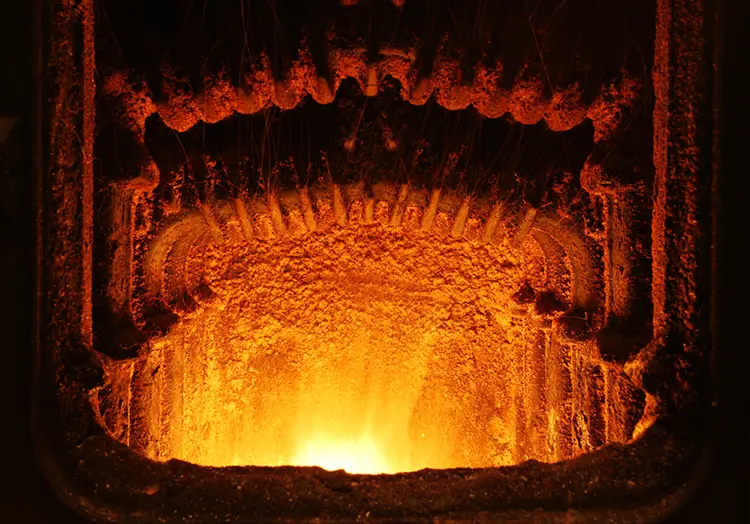
The right furnace is determined by the process requirements, not simply by the highest available temperature. A suitable design must balance thermal performance, material handling, energy consumption, atmosphere, production rate, safety, and emissions.
- Temperature: Define the required operating temperature, temperature range, heating rate, and temperature uniformity before selecting the furnace.
- Heat source: Compare natural gas, other fuels, electricity, induction, or electric arc according to energy availability, process requirements, and operating economics.
- Process: Determine whether the furnace must heat a solid load, melt material, heat a flowing process stream, perform a chemical reaction, or destroy waste.
- Capacity: Size the furnace around the required mass flow, batch weight, heat duty, or production rate rather than chamber volume alone.
- Batch or continuous: Batch operation offers flexibility, while continuous operation is generally better for stable, high-volume production.
- Atmosphere: Consider whether the process requires air, inert gas, reducing conditions, vacuum, or another controlled atmosphere.
- Efficiency: Evaluate heat recovery, insulation, combustion efficiency, flue-gas losses, and the actual thermal duty delivered to the process.
- Emissions: Fuel-fired and waste-processing furnaces require appropriate combustion control and emissions management. The applicable environmental and safety requirements should be considered during the initial design, not after equipment selection.
For process plants, furnace selection can also affect supporting systems. The thermal duty and process conditions may influence upstream and downstream equipment, including dehydration package, desalter package, and other process-treatment systems.
Industrial Furnace Comparison
The following comparison shows where the major industrial furnace categories fit and what distinguishes them.
|
Furnace type |
Heat source | Typical operation | Main applications |
Key characteristic |
|
Fired furnace |
Gas or liquid fuel | Batch or continuous | Process heating, petrochemical | High thermal duty |
| Electric furnace | Electricity | Batch or continuous | Heat treatment, specialty processing |
Precise temperature control |
|
Direct-fired furnace |
Fuel combustion | Usually continuous | Process and material heating | Direct heat transfer |
| Indirect-fired furnace | Fuel or electricity | Batch or continuous | Controlled heating |
Separates combustion gases from load |
|
Vacuum furnace |
Electricity | Mainly batch | Heat treatment, brazing, sintering | Low-pressure atmosphere |
| Induction furnace | Electricity | Batch/semicontinuous | Metal melting |
Electromagnetic heating |
|
Rotary furnace |
Gas or electricity | Continuous/batch | Calcination, oxidation | Rotating material bed |
| Box furnace | Gas or electricity | Batch | Heat treatment, curing, calcination |
Flexible enclosed chamber |
|
Walking beam furnace |
Usually fuel-fired | Continuous | Steel reheating | Controlled material movement |
| Salt bath furnace | Usually electricity | Batch | Metal heat treatment |
Rapid heat transfer through molten salt |
|
Incinerator furnace |
Fuel + waste | Continuous/batch | Waste destruction | Thermal destruction and emissions control |
| Reformer furnace | Fuel-fired | Continuous | Hydrogen and syngas production | Supplies heat to reformer tubes |
The table also shows why furnace names can overlap. A single system may simultaneously be a fired furnace, continuous furnace, process furnace, and indirect-fired furnace. These labels describe different aspects of its design rather than mutually exclusive categories.
Furnace vs. Oven: What Is the Difference?
The practical difference between a furnace and an industrial oven is mainly the temperature range, process duty, and heating environment rather than the name alone. Furnaces are generally associated with higher-temperature operations such as melting, calcination, heat treatment, and chemical processing, while ovens are commonly used for lower-temperature drying, curing, baking, or coating.
There is no universal temperature boundary that separates every furnace from every oven. Equipment terminology varies by industry and manufacturer. The more useful distinction is therefore based on what the equipment must accomplish.
If the process requires melting metal, calcining minerals, reforming hydrocarbons, or performing high-temperature heat treatment, a furnace is typically the appropriate category. If the objective is drying, curing, or baking at comparatively moderate temperatures, an industrial oven may be more suitable