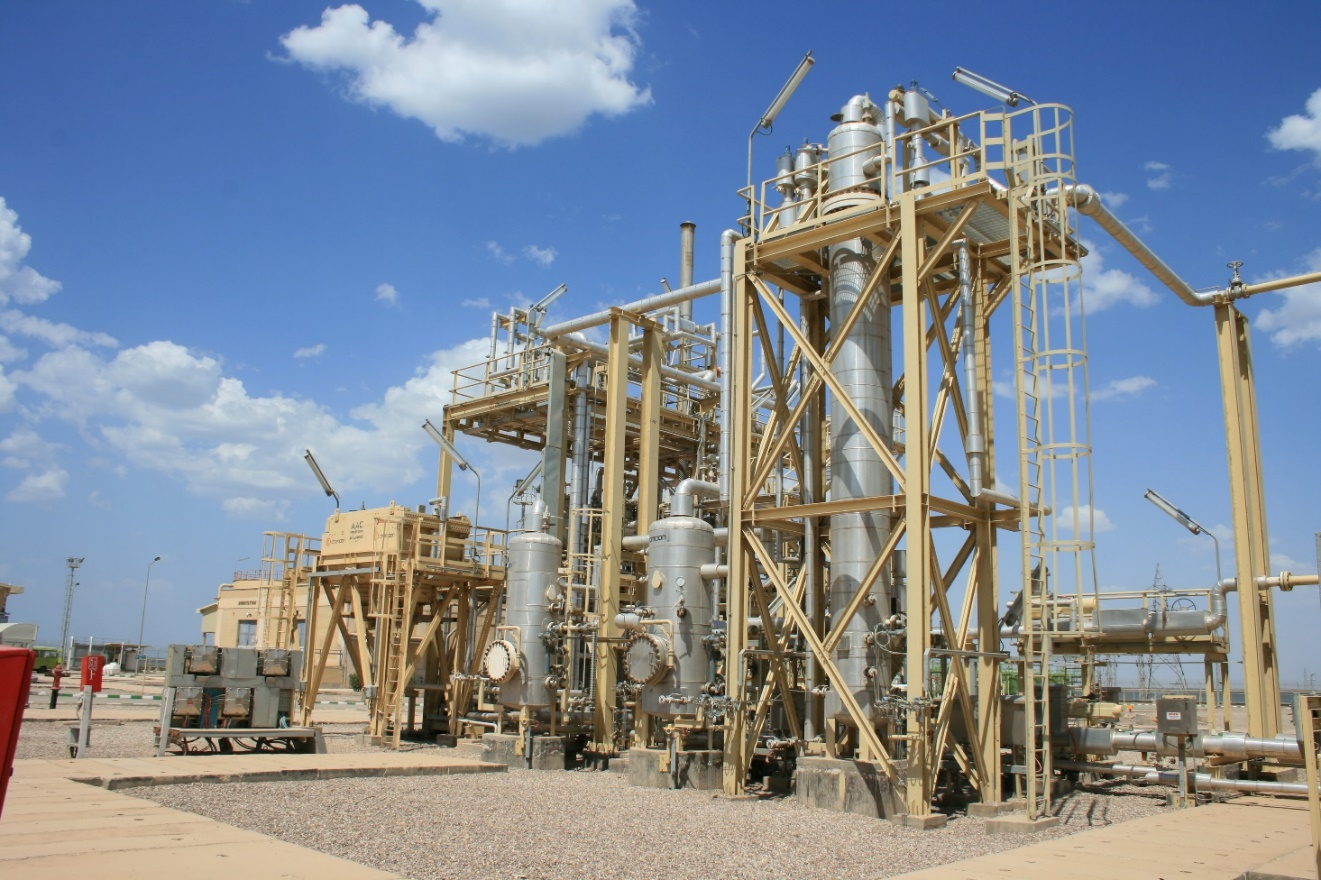
A Dehydration Package is a process system designed to reduce water vapor in natural gas and lower its water dew point. Chamaan provides design and engineering services for gas dehydration and glycol regeneration packages, tailored to the characteristics of the gas stream and the operating requirements of each project.
Excess moisture in natural gas can contribute to hydrate formation, corrosion under suitable conditions, and operational problems in pipelines and downstream equipment. Gas dehydration helps meet the required gas specifications before transportation or further processing. Unlike dehydration, free-water separation removes liquid water from the gas stream and does not, by itself, eliminate water vapor.
How Does a Glycol Dehydration Package Work?
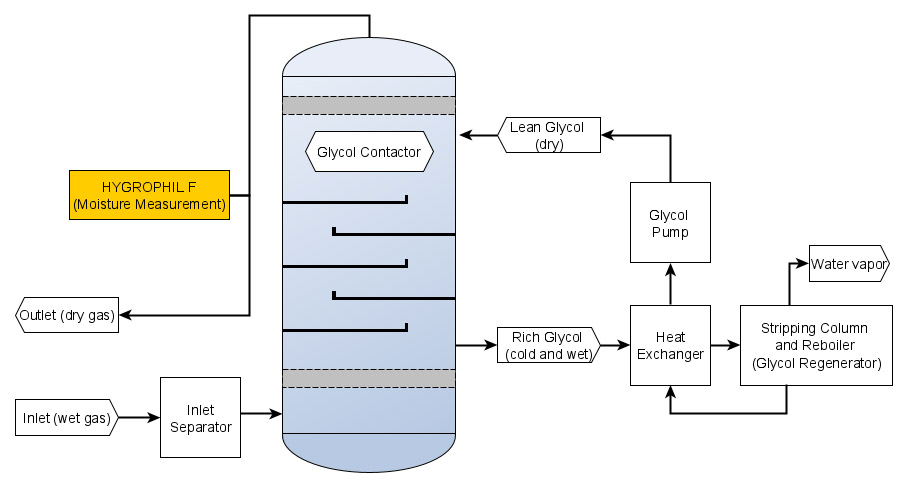
A Glycol Dehydration Package removes water vapor through two main stages: absorption and glycol regeneration. Triethylene glycol (TEG) is widely used because it absorbs water effectively and can be regenerated for reuse.
- Absorption: Wet natural gas enters a contactor, where it comes into contact with lean glycol. Water vapor transfers from the gas into the glycol, and dehydrated gas exits the contactor.
- Glycol regeneration: Water-rich glycol is sent to the regeneration section. Heat and suitable operating conditions separate the absorbed water, allowing the regenerated glycol to return to the absorption circuit.
This integrated process combines TEG dehydration with glycol regeneration to maintain the required gas quality. Actual operating pressure, regeneration temperature, and outlet moisture specifications depend on the process design and project requirements.
Simplified Flow Diagram of Glycol Dehydration unit
Key Design Parameters for a Gas Dehydration Unit
The performance of a Gas Dehydration Unit depends on the gas composition, operating conditions, moisture load, and required outlet specifications. Chamaan considers the following parameters when evaluating project requirements.
Get product catalog
Key Design Parameters for a Gas Dehydration Unit
The performance of a Gas Dehydration Unit depends on the gas composition, operating conditions, moisture load, and required outlet specifications. Chamaan considers the following parameters when evaluating project requirements.
|
Design parameter
|
Importance in process design
|
|
Gas flow rate and specific gravity
|
Establish the basis for capacity calculations and gas flow conditions.
|
|
Operating pressure
|
Influences water vapor equilibrium and contactor performance.
|
|
Gas and glycol temperatures
|
Affect absorption efficiency and regeneration conditions.
|
|
Inlet water content
|
Determines the incoming moisture load.
|
|
Glycol circulation rate
|
Influences water absorption capacity and system performance.
|
|
Glycol purity
|
Affects dehydration performance and the condition of regenerated glycol.
|
|
Foaming and contamination
|
Can reduce efficiency and cause glycol carryover or operating problems.
|
|
Gas composition and corrosive components
|
Require assessment of H₂S, CO₂, chlorides, water content, and operating conditions when evaluating corrosion risks.
|
These parameters must be assessed together. For example, increasing glycol circulation alone does not guarantee better dehydration if glycol purity, contactor performance, or regeneration conditions are inadequate.
Main Components of a Glycol Dehydration System
A Glycol Dehydration System may include a gas–glycol contactor, glycol regeneration equipment, circulation pumps, heat exchangers, filtration equipment, and process instrumentation. The final equipment configuration depends on the process design and project specifications.
- Gas–glycol contactor: Provides the contact area required for water vapor absorption.
- Glycol regeneration section: Removes absorbed water so the glycol can be reused.
- Glycol circulation pumps: Maintain the required glycol flow through the process circuit.
- Heat exchangers: Support heat recovery and temperature control where specified by the design.
- Glycol filtration equipment: Helps control contaminants that may affect glycol performance.
- Process instrumentation and control: Supports monitoring of operating conditions and process stability.
Additional equipment, such as inlet separators or scrubbers, may be required depending on the incoming gas stream and the presence of free liquids or contaminants. These components should be specified according to the actual process requirements rather than assumed to be included in every package.
Applications and Performance Requirements
Gas dehydration packages are used in natural gas production, gas processing facilities, pipeline transportation, and installations supplying gas to downstream units. The required outlet moisture content depends on the intended application, operating pressure, and applicable gas specifications.
Reliable measurement of outlet moisture or water dew point is essential for verifying dehydration performance. It also helps assess compliance with the target gas specification and reduce the risk of hydrate formation in connected pipelines. No single outlet moisture limit applies to every project; the acceptance criteria must be established for the specific operating conditions.
Chamaan's Gas Dehydration and Glycol Regeneration Engineering
Chamaan has designed and engineered gas dehydration and glycol regeneration packages for projects in Iran. The company's project experience includes different design requirements arising from wet-gas characteristics, dry-gas specifications, operating temperatures and pressures, and natural gas sourness.
Each Gas Dehydration Package Design must account for the relationship between inlet gas conditions, moisture removal requirements, glycol circulation, regeneration performance, and the required outlet gas quality. For sour gas applications, the effects of H₂S, CO₂, and their interaction with the process and materials must also be evaluated.
Depending on the project's process configuration, gas dehydration may form part of a wider gas processing facility alongside equipment such as a chemical injection package, a Desalter package, or an incinerator furnace. These systems serve different process duties and should be selected according to the facility's engineering requirements. In facilities that produce hydrogen-rich process streams, steam reforming may also be relevant to the broader process configuration.