
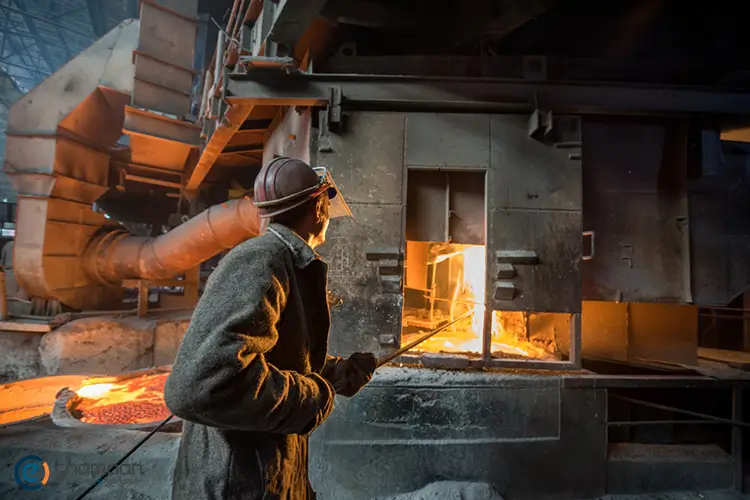
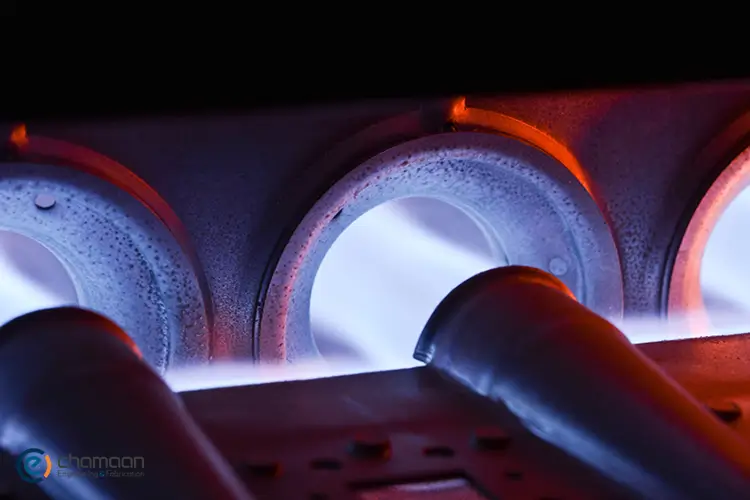
Gas furnaces convert natural gas or propane into heat for residential and commercial buildings. Understanding their components, AFUE ratings, and fuel requirements helps property owners and facility managers select suitable heating equipment while controlling energy consumption.
What Is a Gas Furnace?
A gas furnace burns fuel to heat air, which a blower distributes through the building’s ductwork. Its main components include the burner assembly, heat exchanger, gas valve, ignition system, blower motor, and exhaust vent.
Gas furnaces are classified as non-condensing or condensing. Non-condensing models typically achieve around 80% AFUE, while condensing furnaces recover additional heat from exhaust gases and commonly reach 90%–98% AFUE.
If you are looking for a reliable source to purchase various types of furnaces, be sure to check out Chaman’s other pages and view our products. Industrial Furnaces for Sale is just one of the products we offer for the oil and petrochemical industries.
How Do Gas Furnaces Work? (Step-by-Step)
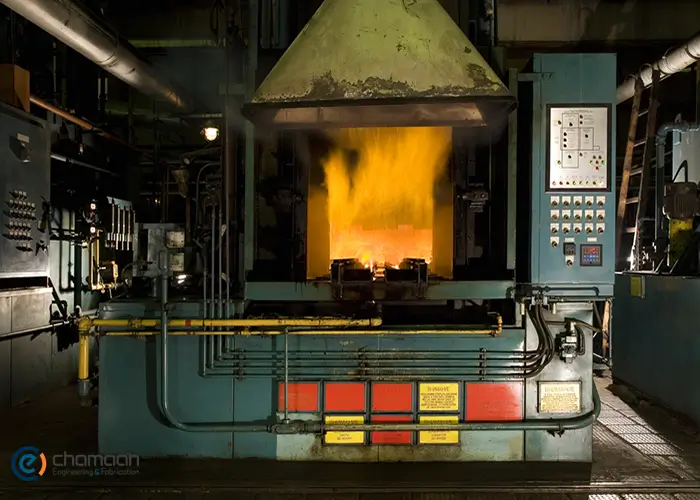
A gas furnace follows an automatic heating cycle controlled by the thermostat and internal safety systems.
- Thermostat call for heat: The thermostat signals the control board when indoor temperatures fall below the set point.
- Ignition and combustion: The ignition system lights the burner after the required safety checks, and the gas valve regulates fuel delivery.
- Heat transfer: Combustion gases pass through the heat exchanger, transferring heat to the surrounding air.
- Air distribution: The blower motor pushes heated air through the supply ducts and into the building.
- Exhaust venting: The inducer fan helps move combustion gases outdoors through the flue vent.
When the thermostat reaches its target temperature, the burner shuts off. The blower may continue running briefly to distribute residual heat.
Of course, the operating methods of different furnaces vary; for instance, A steam reformer uses high-temperature catalytic reactions, commonly involving steam and hydrocarbons, to produce hydrogen-rich synthesis gas. Its design depends on feed composition, reaction conditions, catalyst requirements, and downstream gas processing.
What Does a Furnace Do? (Key Principles Explained)
A gas furnace maintains indoor temperatures by generating heat and circulating warm air throughout a building. In many split HVAC systems, it also serves as the central air handler when paired with compatible cooling equipment.
Correct sizing is essential. An oversized furnace may cycle too frequently, while an undersized unit may struggle to meet heating demand during cold weather. Ventilation and indoor air filtration require separate or compatible system components.
Gas Furnace Components & Technical Architecture
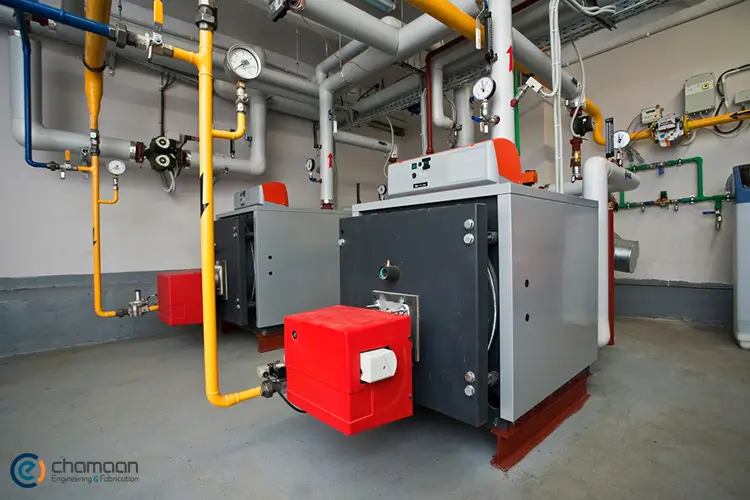
Gas furnace performance depends on the coordinated operation of its heat transfer, combustion, airflow, and safety components.
Heat Exchanger
The primary heat exchanger transfers heat from combustion gases to circulating air while keeping the two streams separated. Condensing furnaces use a secondary heat exchanger to recover additional heat from exhaust gases. Cracks or corrosion can compromise safe operation.
Burners and Hot Surface Igniter Assembly
The burner assembly mixes fuel with combustion air to produce a controlled flame. A hot surface igniter or another approved ignition system starts combustion, while correct gas pressure and airflow support stable operation.
An incinerator furnace also features this exact component, which is useful during the waste combustion process.
Blower Motor and Draft Inducer Fan
The blower motor circulates indoor air through the heat exchanger and ductwork. Variable-speed ECM motors adjust airflow to changing demands, while the draft inducer fan helps move combustion products through the exhaust system.
Gas Valve and Safety Controls (Flame Sensor, Limit Switches)
The gas valve regulates fuel delivery, and the flame sensor confirms that combustion is established. Limit switches protect against overheating, while other safety controls monitor conditions such as exhaust draft and flame rollout.
Flue Venting and Exhaust System
The flue vent carries combustion products outdoors. Condensing and non-condensing furnaces may require different vent materials and configurations because their exhaust temperatures and condensate production differ.
Safety Warning: Carbon Monoxide (CO) Mitigation & Heat Exchanger Integrity Check Guidelines
Arrange annual professional inspections to check the heat exchanger, combustion system, and exhaust vent. Install carbon monoxide alarms according to local requirements. If an alarm sounds, leave the building and contact emergency services.
What Does AFUE Mean, and Why Does It Matter?
Annual Fuel Utilization Efficiency (AFUE) measures the proportion of a furnace’s annual fuel energy input converted into useful heat. A higher rating generally means less fuel is required to deliver the same amount of heat.
Typical benchmarks include:
- Around 80% AFUE: Conventional non-condensing furnaces.
- Around 90%–98% AFUE: Many high-efficiency condensing models.
- AFUE ≥ 90%: A useful reference point for high-efficiency equipment.
Upgrading from an 80% to a 95% AFUE furnace can reduce fuel consumption, but actual savings depend on heating demand, fuel prices, installation quality, and equipment costs.
How Does a Gas Furnace Work in a Dual-Fuel Heat Pump System?
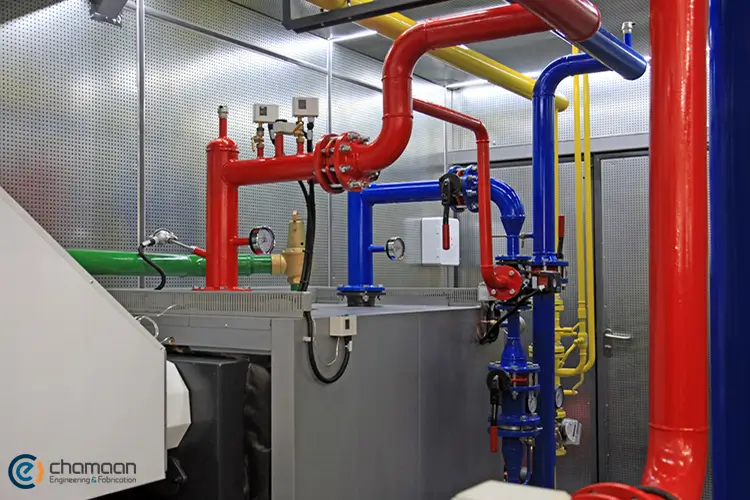
A dual-fuel system combines an electric heat pump with a gas furnace. The heat pump typically handles milder conditions, while the furnace takes over when the system’s controls determine that gas heating is more suitable.
The changeover depends on outdoor temperature, heat pump performance, building heat loss, and local electricity and gas prices. Although 30°F–40°F (-1°C to 4°C) can serve as a reference range, there is no universal switching temperature. Proper system configuration helps balance comfort and operating costs.
Gas Furnaces By The Numbers: Performance Metrics & Benchmarks
These figures provide general reference points; actual specifications vary by equipment and application.
- AFUE: Approximately 80%–98.5% across conventional and high-efficiency models.
- Service life: Often 15–20 years or longer, depending on maintenance and operating conditions.
- Heating capacity: Around 40,000–120,000+ BTU/hr for many residential units.
- Blower electricity use: ECM motors can consume substantially less electricity than comparable PSC motors, although savings depend on operating conditions.
- Temperature control: Two-stage and modulating burners provide more gradual heat output than single-stage designs.
Compare manufacturer specifications under equivalent conditions rather than relying on efficiency ratings alone.
Fuel Quality & Fuel Pre-Treatment for High-Performance Gas Systems
Fuel quality affects combustion stability, equipment reliability, and maintenance requirements. Industrial facilities using process gas or variable-composition fuel streams may need conditioning to remove moisture, liquids, particulates, or other contaminants. Standard residential natural gas generally does not require a dedicated industrial treatment package.
In industrial applications, a Dehydration package can remove excess water from suitable gas streams, helping reduce liquid carryover and moisture-related operating problems. A Desalter package is relevant to applicable liquid hydrocarbon processing systems, where salt removal can limit downstream deposits and corrosion; it is not a standard requirement for residential furnace gas.
Where process conditions justify chemical treatment, a chemical injection package can deliver controlled quantities of selected treatment chemicals into compatible process streams. Chemical selection depends on fluid composition, materials, temperature, and treatment objectives.
Engineering Note: Fuel Conditioning Impact: How Moisture and Salt Pre-treatment Extends Heating System Lifespan
Fuel conditioning can improve reliability when contaminants exceed downstream equipment specifications. Treatment requirements should be based on fuel analysis and engineering design rather than assumed necessary for every gas-fired system.
Learn More About Choosing a New Furnace: Selection Checklist
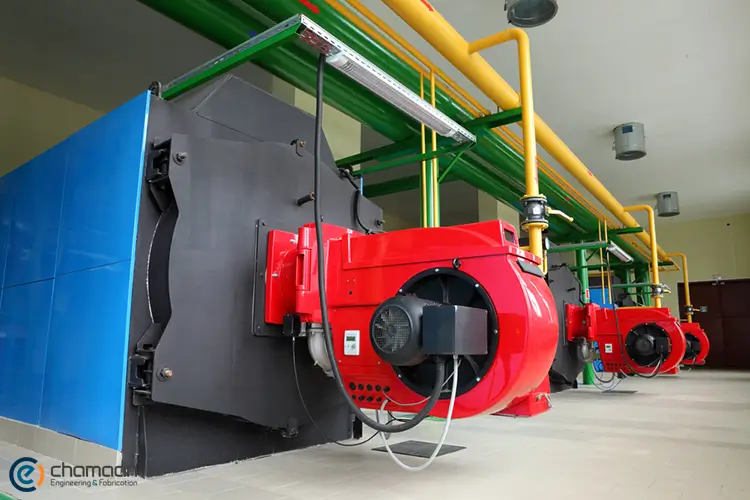
The right furnace depends on heating demand, desired temperature control, climate, fuel availability, and lifecycle costs. The following table compares common configurations; AFUE depends on the specific model, not simply its burner architecture.
|
Furnace Architecture |
AFUE Rating Range | Comfort & Temperature Control |
Best Used For |
|
Single-stage |
Approximately 80%–96% | One firing rate; straightforward control |
Applications prioritizing simplicity and lower initial cost |
|
Two-stage |
Approximately 90%–97% in high-efficiency models | Switches between lower and higher output |
Buildings benefiting from more consistent heating |
|
Modulating / Variable-Speed |
Approximately 90%–98.5%, depending on model | Adjustable heat output and airflow |
Applications requiring precise temperature control |
Before selecting equipment, evaluate three factors:
- Climate zone: Calculate the building’s heating load and account for local winter design temperatures.
- Fuel availability: Compare natural gas, propane, or dual-fuel options using local energy prices.
- Long-term energy ROI: Weigh installation costs against expected fuel consumption, maintenance, and service life.
A higher AFUE rating does not automatically guarantee the lowest total cost. Proper sizing and installation remain essential.
Contact Our HVAC & Thermal Systems Specialists for a Quote
Selecting gas-fired equipment requires consideration of heating capacity, fuel specifications, venting, installation conditions, and operating costs. Industrial projects may also require customized fuel conditioning and process-specific thermal engineering.
Contact our specialists at Chamaan to discuss industrial gas processing and thermal equipment requirements. Our team can help you evaluate technical needs and identify suitable solutions for your application.
Frequently Asked Questions About Gas Furnaces
What is the difference between an 80% and a 95% AFUE gas furnace?
An 80% AFUE furnace converts approximately 80% of its annual fuel energy input into useful heat, compared with 95% for a high-efficiency model. Condensing furnaces recover additional heat from exhaust gases, reducing fuel consumption.
How often should a gas furnace heat exchanger be inspected?
A qualified technician should inspect the furnace annually, checking the heat exchanger for cracks or corrosion and assessing burner operation, venting, and safety controls.
Why is feed gas pre-treatment necessary for gas combustion equipment?
Pre-treatment removes contaminants that exceed equipment specifications and could cause corrosion, deposits, or unstable combustion. Conventional residential natural gas generally does not require additional industrial conditioning.
When should a dual-fuel heat pump system switch to gas furnace heat?
The system should switch when gas heating better meets its efficiency, capacity, or operating-cost objectives. The changeover point varies with equipment performance, climate, building heat loss, and local energy prices.